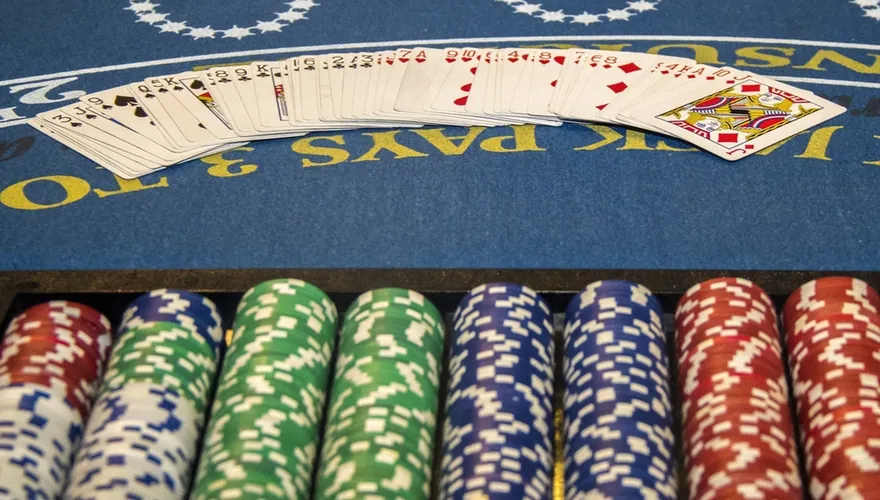
Imagine playing blackjack and losing a game. Your thoughts likely drift towards what you could have done differently to win. Such thoughts are known as counterfactual thoughts, and they come in different types—evaluative and reflective. Evaluative counterfactuals focus on alternatives alongside actual events, while reflective counterfactuals zero in solely on the “what could have been.”
Researchers from Wake Forest University explored the impact of these types of counterfactual thinking on memory and confidence in a study involving college students. They discovered that focusing solely on what could have been, rather than what actually happened, can lead to distorted memories and inflated confidence in one’s performance. Ultimately, this translates to riskier behavior in future games of blackjack.
The Blackjack Experiment: College Students, Cards, and Counterfactuals
A group of 56 undergraduates were asked to play 40 rounds of blackjack on a computer. After each game, they were prompted to list their thoughts based on different instructions. Some were asked to think about how they could have achieved a better outcome alongside what actually occurred (evaluative). Others were told to only think about the alternative outcomes (reflective). The third group, the control, had no specific thought-listing instructions. The goal was to examine how these different thinking modes impacted the players’ confidence and memory regarding their performance.
The Results: Your Brain Lies to You About Your Blackjack Skills

The study found that participants who engaged in reflective counterfactual thinking were more likely to overestimate their performance and show increased confidence in future blackjack playing. Specifically, this group recalled winning about 7% more games than they actually won. On the other hand, the evaluative group, who balanced alternative outcomes with reality, did not show significant distortions in memory or inflated confidence.
The connection between reflective counterfactual thinking and confidence was found to be mediated by the accuracy of one’s memory. In other words, those who frequently engaged in reflective counterfactuals seemed to experience a kind of “imagination inflation,” which led them to overestimate their past performance, thereby boosting their future confidence.
The Significance of the Study and the Solution
The study builds on existing literature about counterfactual thinking and memory distortion. The results suggest that the way we think about past events, especially losses, can significantly impact our future behavior and decision-making. Overconfidence, rooted in distorted memories, can lead to risky behavior and poor decisions, a particularly worrying trend if applied to real-world scenarios like gambling or even investing.
Moreover, the study also suggests a straightforward solution to counteract this cognitive distortion: balancing reflective thoughts with a healthy dose of reality. By doing so, individuals can develop a more accurate sense of their skills and limitations, making them less likely to take unnecessary risks based on distorted memories.
Balancing Fantasy and Reality Can Save You From Bad Decisions
The Wake Forest University study provides valuable insights into the psychology behind counterfactual thinking and its influence on human behavior. By demonstrating the pitfalls of solely focusing on “what could have been,” it warns us of the potential dangers of overconfidence and distorted memory. This has implications not only for gamblers but also for decision-makers in various other fields. It nudges us towards a balanced approach to thinking – taking lessons from both reality and imagination to inform better decisions in the future.
Resources: Science Direct